
Sam Heard, Medical Practitioner, Chair of the openEHR Foundation
I am an Australian doctor who completed my medical degree and intern year in Adelaide, South Australia, before heading off to London on a motor bike through South East Asia and India with my girlfriend, who is now my wife. I was keen to be a good general practitioner (GP) and successfully applied for a three-year GP training position, based at St Bartholomew’s Hospital in Central London.
Early Days
My interest in health computing began in 1984. I had completed my GP training and became an Inner City Lecturer at the Department of General Practice, St Bartholomew’s Hospital Medical College, London University. The department had the first computerised general practice in the UK; a large machine in its own airconditioned room in the Wells Street practice in Hackney. My role as lecturer was both clinical and academic. I became the partner of an elderly solo practitioner in order to modernise the practice. It was in a tiny space in Shoreditch, providing comprehensive health care to 3500 patients 24/7 and, initially, had no receptionist. I saw 85 patients on the first day when my older partner became jaundiced and went home – never to return. The university wanted me to implement their second version computing system using concurrent CPM and I agreed. I wanted anything that might help the workload and organisation of care for this large group of patients.
The computer programmer from the Dept of General Practice sadly developed a brain tumour and had to stop working, leaving an incomprehensible program which did not work. This experience sowed a seed and I was really excited to help develop and use computers for primary care. He was using Q-Basic which I decided was too difficult for me to get my head around given my clinical responsibilities. In 1985 my father sent me his IBM Personal Computer (PC) from Australia as he had retired. I added a 10 MB hard drive! Borland had just published Paradox, and Tony Randall in Oxford encouraged me – he was using D-Base. These were the first PC-based databases with multiuser capability. No Windows, just MS-DOS from Bill Gates. PC networks were just becoming stable. I used Paradox to create a patient management and follow up system; it was all a whole lot easier than using Q-Basic. Over 18 months I had things moving and surpassed the functionality of the original program.
I established a GP IT cooperative with the support of the Family Practice Committee (NHS payers) in 1987. Normalising addresses (autofill from a defined set) – now common – had not been done before and it had wonderful results, allowing us to achieve the highest immunisation and cervical screening rates in London in a very low socio-economic setting. About 80 GPs from East London joined the Coop and together we improved the care of the patients substantially.
More than Rows and Columns: GEHR
Very early in my days of building this simple system (usually done at home after our four children had gone to bed and as long as there were no house calls) I decided that files consisting of rows and columns were not suitable for health records (think Excel which did not exist at the time). MUMPS had been created by Octo Barnett in the 1960s and brought together the related rows and columns (a real speed advantage) whereas Paradox, the modern alternative, had all the data relating to one patient separated in many different tables. To add any new data, I had to change the database, often needing to add tables. This was hard to manage across many practices. There had to be a better way.
Alain Maskens from Belgium came to see me in 1989 promoting his software, HealthOne. This was a real breakthrough from my perspective. Gone were the rows and columns, and the data to be collected could be specified through the user interface! Alain was ambitious for his software and had built a consortium to make a bid for a large European health record project. He invited me to Brussels to see what could be put together. I had met Professor David Ingram, the first professor of health informatics in the UK, at my University and I was advised by Lesley Southgate, my then professor of General Practice, to go and see him. I invited David to come to Brussels – he agreed but was very clear he would not be getting involved. By the end of the meeting David was the leader of the project and put in a huge effort with Alain to successfully stand up what became known as the Good European Health Record (GEHR) project. In 1991 the GEHR project grant was the largest that St Bartholomew’s Medical College had ever received.
Joe Milan, a close associate and friend of David Ingram, joined the project. He was leading the UK health computing stakes with his MUMPS based system at the Royal Marsden Hospital and added weight to what was a colourful and diverse group of people from many European countries. I learned a great deal during the three years of this project despite having to relocate with my family to Australia in late 1992 and spending the last two years of the project flying back to London from Darwin.
Dipak Kalra (a GP using ParaDoc) and David Lloyd, prominent members of David Ingram’s team at the time, took major roles in the project. It was during this time that I met Thomas Beale, an Australian computer scientist and engineer, who was employed by Joe Milan and was seconded to the GEHR project. Thomas and I spent many evenings proposing ever more revolutionary solutions to what was now recognised as a ‘wicked problem’ but made little progress. There were very significant outcomes from the GEHR project, which contributed to what would later become openEHR. The first was to view the health record as a transactional artefact, enabling clear data provenance and roll-back to any point in time. The second was that it should work best for practicing clinicians. The final GEHR output was not suitable for implementation but was in the form of a technology independent specification, rather than software; a novel approach in the early 1990s.
The Birth of openEHR in Australia
Thomas Beale came back to Australia after the GEHR project finished in 1994 and dedicated one day per week to continue working with me on what we had come to see as a lifelong health record specification, with multilingual capabilities. I was working in the remote Northern Territory and leading the general practice educational unit of the new clinical school. This gave me time to collaborate with vendors and interested practitioners and I soon gained a reputation for innovation in this area.
I was asked to write a paper on a future view of health records for Australia by the new Government agency (which became NEHTA), giving me more time to dig into detail. Thomas was working in finance at the cutting edge of object-oriented programming with a language called Eiffel. Together we refined the structure and organisation of a lifelong health record, with some aspects to assist human navigation and organisation, others to enable safe automatic processing. But we could not solve the issue of the evolving clinical demand for new or extended data.
Working closely with Thomas, we learnt each other’s domains of knowledge to a considerable extent. Thomas was often assumed to be a clinician in meetings. After nearly 3 years of working together, including many, many hours on the phone and some high-level workshops in Darwin, Thomas and I decided in 1997 to spend two weeks dedicated to solving the problem of how to specify the clinical data. We agreed that if we failed we would give up. It had begun to feel a little futile working so far from other expert input. The fortnight was not very productive and at lunch on the last day – with just a few hours left – Thomas threw up his hands and said in frustration, “This would be easy if we just left out the clinical data.” We look at each other and thought about how we could do that. Within two hours we had the gist of openEHR down – with archetypes as the enabler. The EHR as a service was just a set of building blocks – datatypes, ways of aggregating, headings etc – some to assist safe processing and some to assist people using the record to understand the contents. The archetypes were the specification of how to represent clinical data using these building blocks. There were more features that quickly fell into place as we got into our stride over the next few months – safe display of any entries, roll back to a point in time, linking to multiple terminologies, a wealth of datatypes.
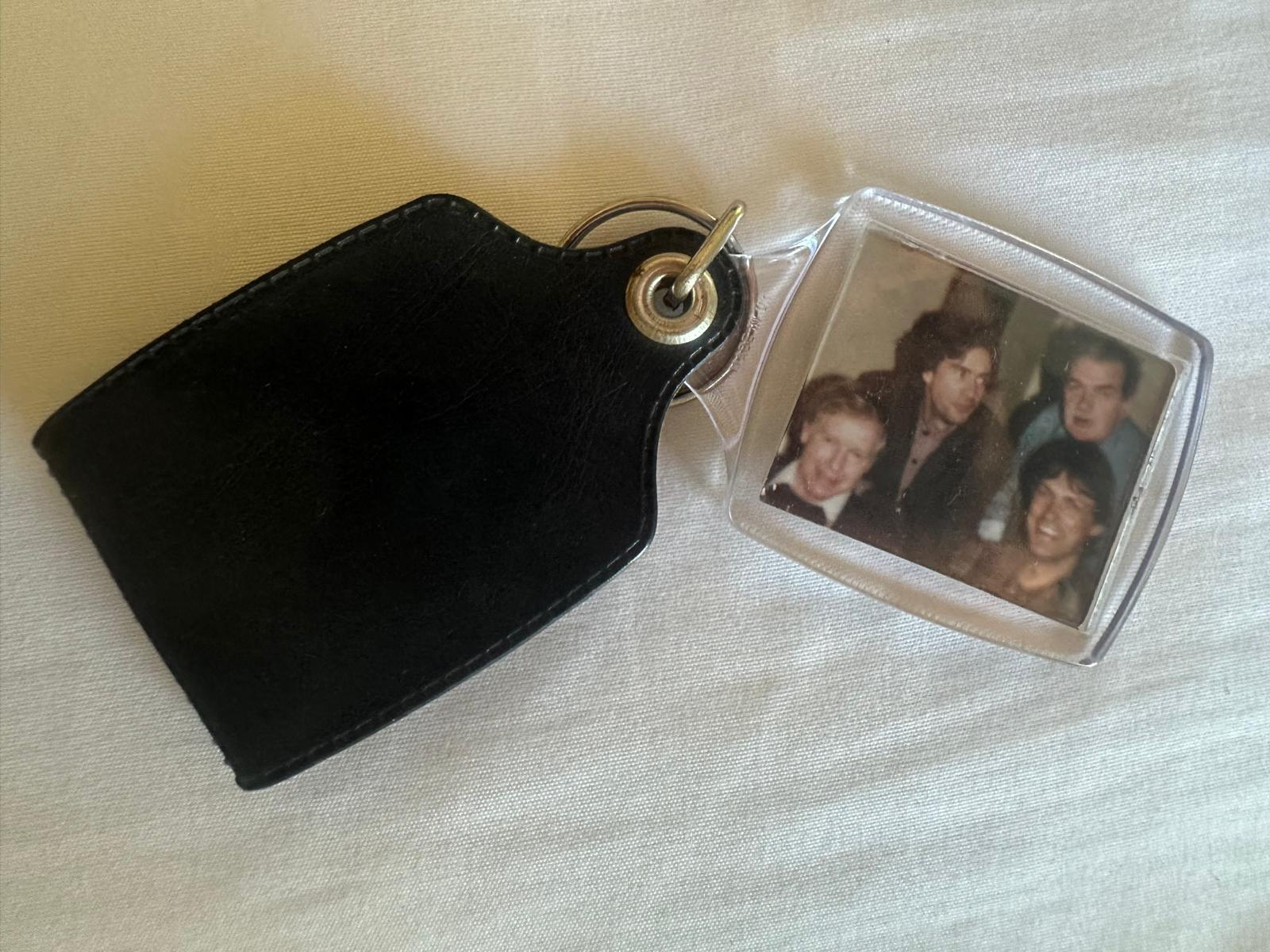
1998 Key ring from a Spanish Restaurant in Sydney the day Thomas and I created Ocean Informatics with David Rowed and Peter Schloefel after their IBM consultancy came across our work.
Thomas took on the enormous work of creating archetype definition language (ADL) – which was the first part of openEHR to be accepted by ISO about a decade lager. He ensured correctness of these archetype definitions and documented the reference model in great detail. The reference model is a logical model of what the computers process – in whatever language and using whatever data store is fashionable at the time. Refining this specification was slow, despite the increasing assistance from others, particularly David Ingram’s team now at University College London (UCL).
By 1999 I had completed programming the first archetype editor which enabled display of the archetypes – a giant leap to gaining acceptance and led to invitations to HL7 and CEN meetings. In 2006 Hugh Leslie and I built the template designer. I also built the first openEHR kernel to write and read data, with validation based on archetypes. I am proud to have contributed as a clinician to something that is designed to change health care fundamentally.
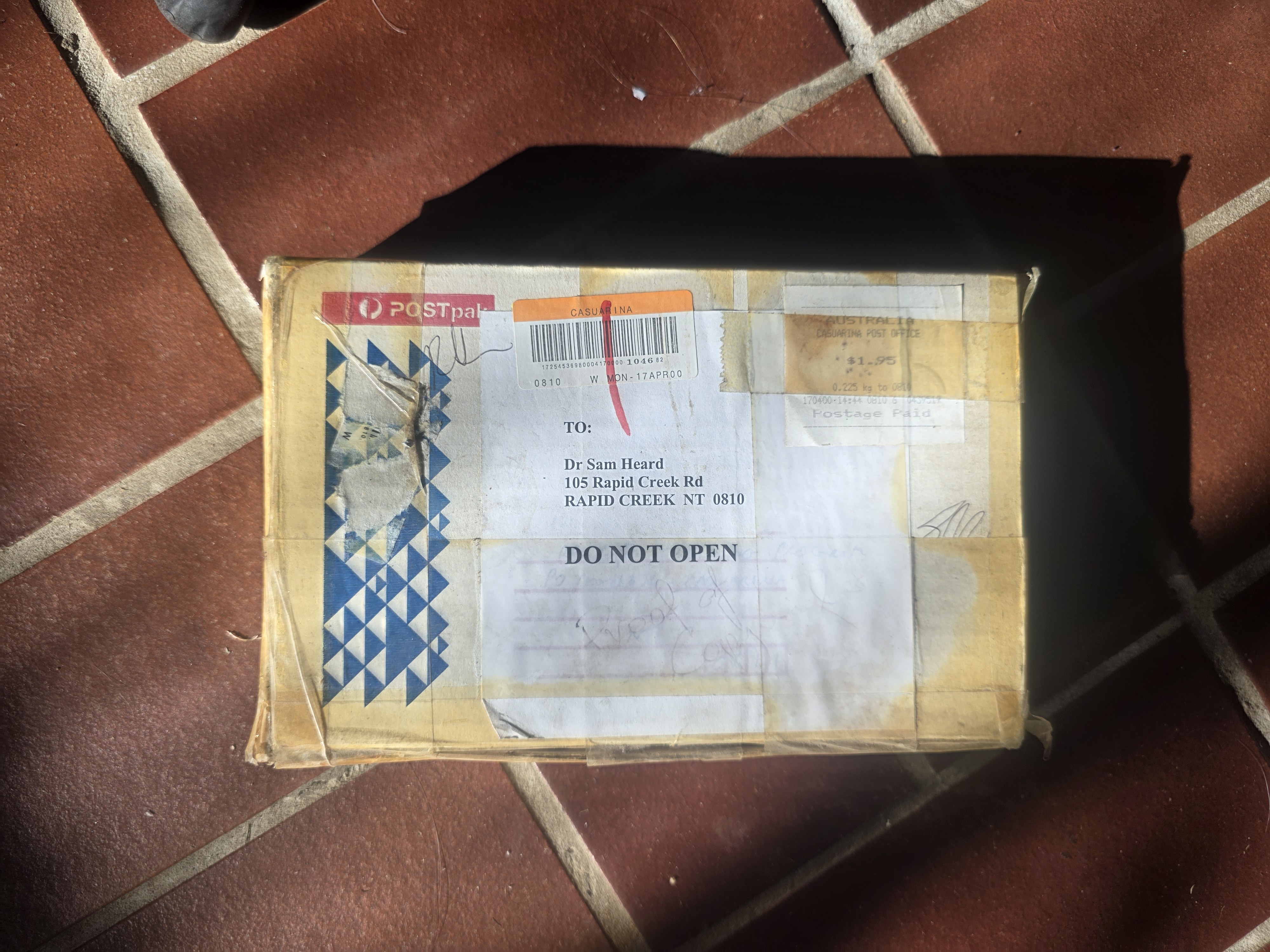
A CD-ROM posted by Thomas to me on the 27.04.2000 to ensure Ocean could prove to be the source of the (as yet unnamed) openEHR specifications – it remains unopened!
The Foundation and Beyond
In 2005 Sebastian Garde was living in Australia and doing a PhD with Evelyn Hovenga and he took on the web-based archetype management which became the Clinical Knowledge manager. He now lives back in Germany and his contribution has been extraordinary. Chunlan Ma completed her PhD on openEHR and by 2007 had created the OPT format as well as the Archetype Query Language. This revolutionised the power of openEHR as a solution for health information. Heather Leslie and Ian McNicoll (who had completed his Masters at UCL) began building more and more archetypes and have both made enormous contributions. In 2010 Heath Frankel and Chunlan Ma built the first openEHR system to manage the health records of remote, mobile Aboriginal people in the Northern Territory. This openEHR project received recognition from the WHO. Heath Frankel went on to assist Better to get working with openEHR. Tomaz Gornik, the CEO of Better, has been an extraordinary commercial enabler and promoter of openEHR, and taken Better to be a recognised major international health system provider. He and his team have taken tooling to a new level.
David Ingram supported and encouraged our work and kept supporting Thomas and I during our very frequent trips to Europe and the US where HL7 was involving us in the CDA work but not interested in our approach. In 2005 we deemed it appropriate to publish the specification, David Ingram came up with the name and reserved the openEHR.org URL. University College London supported David in creating the openEHR Foundation which became the home of the specification. He organised the legal framework and other steps to enable the legal transfer from Ocean Informatics and ensure openEHR could move forward safely. That was all more than 15 years ago.
We have weathered incredulity over not specifying the storage format and about the maximal data models. These are now seen as key elements of a specification for a lifelong health record. We faced down Microsoft, Google and Apple’s efforts to create a personal health record. That was nerve wracking to say the least. And all the while David Ingram kept his hand on the helm and made the community something strong and resilient, long before it had any need to be. I am excited to see the new minds and new companies taking openEHR forward. There are still many familiar faces, individuals and teams, particularly in Europe, who have remained committed and passionate for many years and have contributed considerably over that time.
Importantly, openEHR grew from a very deep collaboration between a computer scientist/engineer and a doctor – at a time when these professions were starting to have mutual concerns. Thomas still works as an engineer and computer scientist in the USA and Europe, and I have until recently been the medical director of a large Indigenous community controlled health service in Australia.
Finally my wife, Merridy Pitcher, has had a lot to do with the success of openEHR – from supporting all my activities, coaching on how to approach difficulties, co-writing documents, managing Ocean Informatics which was our early vehicle for supporting the work and never giving up on the vision of a lifelong health record that could make a difference.
Appendix
My CV Entries relating to openEHR
Appointments
1983-1992 Lecturer, Department of General Practice, Medical College of St. Bartholomew’s Hospital.
1984-1992 Principal in General Practice, The Lawson Practice, St. Leonards, Nuttall St., London N1 5LZ.
1989-1992 Adviser to the City & East London Family Health Authority on computerisation.
1989-1992 Director, Computer Development Unit, Department of General Practice, St. Bartholomew’s Medical College.
1992 Clinical co-ordinator, European Health Record Project, AIM A2014, European Commission.
1993-1995 Research Fellow, St. Bartholomew’s Medical College, London.
1994-1997 Member of Wellcome Trust Tropical Medicine Resource, World Advisory Group
1996- Director, Ocean Informatics
1997-1999 Program leader, Communications and Information, Cooperative Research Centre in Aboriginal and Tropical Health.
1998-1999 Member, Electronic Health Record Architecture Working Party, GPCG
1998- Foundation member, openEHR Foundation
2002-2006 Chair, Standards Australia IT14.9.2 Working Group – EHR
- Co-Chair, HL7 EHR Special Interest Group and Australian delegate to HL7 International
- Australian delegate to Centre de European Normalisation (CEN)
2002-2005 Co-Chair HL7 EHR Technical Committee, Aus delegate to HL7
2002- Director, openEHR Foundation (Ocean Informatics and University College London)
2002-2016 Honorary Senior Research Fellow, University College London
2004-2007 Adjunct Professor, Health Informatics, Central Queensland University, Queensland Australia.
2005-2008 Australian representative at CEN (European Standards)
2005-2007 Vice President, Foundation Fellow, Australian College of Health Informatics, now Australian Institute of Digital Health
2006-2010 Co-chair Standards Aus IT-14-9, Electronic Health Records
2007-2014 CEO, Ocean Informatics Pty Ltd
2011-2014 Chair, openEHR Foundation, London UK
2019-2023 Director, Australian Digital Health Agency
2023- Chair, openEHR Foundation
Research grants and competitive allocations
1990 Computer Development, Family Health Authority £60,000, St Bartholomew’s Medical College
1991-1993 Medical Record structure, European Community £1.9 million, with Prof. David Ingram, Medical Informatics 1993 Healthy Heart Story, National Heart Foundation
2000 The General Practice Computing Group (GPCG) Trial of the Good Electronic Health Record $230,000
2001 GPCG Trial of conversion of legacy data with SA Health Commission, DSTC $100,000
2001 GPCG Trial of Diabetic messaging between General Practice and Specialist Clinics with MCA, $70,000
2002 GPCG Trail of conversion of GP data to the format of the Good Electronic Health Record $90,000
2002 HealthConnect openEHR software trial design with the Distributed Systems Technology Centre $670,000 Phase 1
2004 GPCG openEHR Archetype Tool Development Project developing software tools and documentation to support the uptake of archetypes. $70,000
2004 ITOL grant to establish an EHR repository for the New South Wales Cancer Registry. $30,000
2005 GPCG Archetypes for Communication project. $105,000
Publications and Significant Products
1989 Heard S.”ParaDoc, A health information system for inner city general practitioners”. This system was written in Paradox, a relational database. Innovations centred on the normalisation of practice data to the Post Office address database allowing strict knowledge of households. Tracing people for follow up or screening was greatly facilitated.
1991 Heard S. “A standard medical record for Europe – a view from primary care” Abstract of presentation. 40th workshop in Clinical Decision systems, Royal College of Physicians, London.
1992 Heard S. “The Good European Health Record” Abstract of Presentation. WONCA, Vancouver, Canada.
1992 Heard S. “Clinical Requirements for a comprehensive Electronic Health Record.” Advanced Informatics in Medicine programme, Directorate General XIII, European Commission.
1993 “Functional Specification for an Electronic Health Record”. Advanced Informatics in Medicine programme, Directorate General XIII, European Commission.
1993 “Ethical and legal requirements for a European Electronic Health Record”. Advanced Informatics in Medicine programme, Directorate General XIII, European Commission. Heard S, Doyle L.
1995 “The Good European Health Record” Final Report. Advanced Informatics in Medicine programme, Directorate General XIII, European Commission.
1996 Heard S. “Support for remote health practitioners with Information Technology” Proceedings of the Joint Congress of the Australian College of Health Service Executives and the Royal Australian College of Medical Administrators, Darwin August 1996.
1997 Heard S, Doyal L. “The importance of moral and legal regulation of the Electronic Patient Record.” British Journal of Healthcare Computing and Information Management. March 1997;14(2):26-28
1998 Heard S. “The Good Electronic Health Record” Proceedings of the 1998 General Practice Evaluation Program Conference, Sydney, New South Wales. National Information Service.
1999 Heard S. “The Good Electronic Health Record” Proceedings of the 1999 HISA Conference (HIC), Hobart, Tasmania. Health Informatics Society of Australia.
2000 Heard S. “The Good Electronic Health Record.” British Journal of Health Care Computing and Information Management. February 2000.
2000 Heard S, Grivel A, Schloeffel P, Doust J. “The benefits and difficulties of introducing a national approach to electronic health records in Australia” in “A Health Information Network for Australia” National Electronic Health Records Taskforce. Department of Health and Aged Care, Commonwealth of Australia. July 2000.
2000 Heard S. “The GPCG Trial of the Good Electronic Health Record” Proceedings of the Health Informatics Conference, Health Informatics Society of Australia. August 2000.
2000 Heard S. “Electronic Health Records”, The Australian Health Forum 2000;3:24-25.
2002 Bird L, Goodchild A, Heard S. “Importing clinical data into electronic health records – lessons learnt from the first Australian GEHR trials.” Proceedings of the 2002 HISA Conference, Melbourne, Victoria. Health Informatics Society of Australia.
2003 Heard S, Bird L, Warren J. “Editorial” and Guest Editors. Journal of Research and Practice in Information Technology Vol 35, 2. May 2003.
2003 Barretto S, Warren J, Goodchild A, Bird L, Heard S, Stumptner M. “Linking Guidelines to Electronic Health Record Design for Improved Chronic Disease Management” Proceedings American Medical Informatics Association, November 2003.
2004 Heard S, Fischetti L, Dickinson G. “HL7 EHR Systems Functional Model and Standard” Health Level Seven, http://www.hl7.org.
2005 Heard S. openEHR Architype Editor 1.0 (Visual Basic), Ocean Informatics.
2005 Hovenga E, Garde S, Heard S. “Nursing constraint models for electronic health records: a vision for domain knowledge governance”. Int J Med Inf 2005;74: 886-898.
2006 Heard S. “Electronic Health Records” Chapter in Conrick M Ed. “Health Informatics: transforming healthcare with technology” Thompson Social Science Press, Australia 2006.
2006 Heard S, Leslie Hugh. openEHR Template Designer (C#) Ocean Informatics.
2006 Schuler T, Garde S, Heard S, Beale T. “Towards Automatically Generating Graphical User Interfaces from openEHR Archetypes” Proceedings MIE, Maastricht August 2006.
2007 Garde S, Hovenga E, Heard S. “Towards Semantic Interoperability for Electronic Health Records: Domain Knowledge Governance for openEHR Archetypes”. Methods of Information in Medicine. 46(3): 332–343.
2007 Garde S, Heard S, Leslie Heather, McNicol I. The openEHR Clinical Knowledge Manager, Ocean Informatics.
2011 Frankel H, Ma C, Heard S. The Northern Territory of Australia “My eHealth Record” shared health record based on openEHR specifications, Ocean Informatics.
Presentations
1995 Heard S. “Issues of ownership”- Data ownership and computerised health information. Central Australian Remote Practitioners Association Conference, Alice Springs, May 1995 .
1996 Heard S. “The paperless medical record” IT Week, Queen Elizabeth Hospital, Adelaide, South Australia
1997 Heard S. “The History of Computers in Medicine.” Fifth Biennial Conference of the Australian Society of the History of Medicine. Darwin, Northern Territory.
1998 Workshop at “Working together for an Electronic Patient Record”, the National Meeting Health Informatics Society of Australia, Brisbane.
1998 Heard S. “What sort of Electronic Health Record” Presentation at the National Scientific Meeting of the Royal Australian College of General Practitioners, Melbourne.
2000 Heard S. “The Good Electronic Health Record” RACGP Computer Conference, Sydney, February 2000.
2001 Heard S. “The Good Electronic Health Record” At Integrating Technology in Health Conference, Sheraton Towers Hotel, Melbourne, February 2001. Invited speaker.
2001 Heard, S. “Electronic Health Records” Conference of the National Demonstrator Hospital Projects Phase 3, Sydney Convention Centre, October 2001. Invited Speaker
2001 Heard, S. “Information Technology – Master or Slave”. Royal Australian College of General Practitioners 11th Computing Conference, Melbourne August 2001. Keynote Speaker.
2002 Heard, S. “The EHR and the future: a clinician’s view.” EHR Clinical Aspects and Standards Workshop, Central Queensland University, Yepoon, August 2002. Invited Speaker.
2002 Heard, S. “The EHR and HL7.” HL7 International Affiliates meeting, Melbourne August Invited speaker.
2003 Heard, S. “openEHR and International Developments” The Electronic Health Record, IIR Conferences, Sydney Australia, June 2003. Invited Speaker.
2003 Heard S, Beale T, Schloeffel P. “openEHR Tutorial” Proceedings, of the 2003 HISA Conference and RACGP Computing conference (HIC) Sydney Australia, August 2003.
2004 Heard S. “Archetypes – a user perspective” Keynote address at HL7 Australia National Meeting, Melbourne, Australia 2004.
2004 Heard S, Elkin P. “The relationship between archetypes, templates and terminology”. HL7 Australia National Meeting, Melbourne, Australia 2004.
2005 Heard S, Shabo A. “Lifelong health records: an investigation of the role of independent health record banks” HIC, Melbourne 2005
2005 Heard S. “openEHR – recent developments.” Keynote address, HL7 Australia National Meeting, Sydney November 2005.
2006 Heard S, Chen R “openEHR, a health computing platform for the future”. Workshop and address to the China Healthcare Information Network Conference (CHIMA, CHITA) Xi’an, China May 2006
2006 Heard S “openEHR: the first formal specification for sharing and communicating electronic health records”. Key note address, HINZ Conference, Auckland, New Zealand, July 2006
2006 Heard S, Beale T. “openEHR, a health computing platform for the future”. Workshop, Medical Informatics Europe Conference, Maastricht, Netherlands, August 2006.
2006 Heard S. “Standards and Electronic Health Records” The World of Health IT Conference, Geneva, Switzerland, October 2006.
2006 Heard S. “openEHR and semantic interoperability” Health Informatics Conference, Antalya, Turkey, November 2006

